
Sarajevo to Travnik and Jajce: Discover the Historic Heart of Bosnia
When travelling through Bosnia and Herzegovina, it is easy to focus on Sarajevo and Mostar. Both cities are remarkable destinations, but there is another part of the country that deserves a place on every traveller's itinerary: Central Bosnia.
Just a few hours northwest of Sarajevo, the towns of Travnik and Jajce offer an experience that brings together centuries of history, traditional Bosnian culture and some of the country's most beautiful natural scenery.
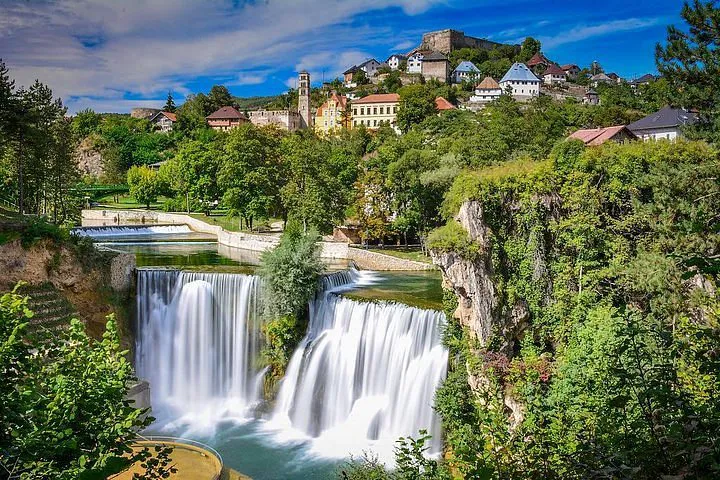
In Travnik, Ottoman-era streets wind beneath a medieval fortress, traditional cafés sit beside a beautiful natural spring, and the town's history is closely connected to the period when it served as the seat of the Ottoman governors of Bosnia. Further along the road, Jajce reveals a different chapter of the country's past. Once an important royal centre of the medieval Bosnian Kingdom, it is now famous for its impressive fortress, historic old town and spectacular waterfall, which flows right through the heart of the city.
Beyond the historical landmarks, the journey offers something equally memorable: the opportunity to experience smaller Bosnian towns, see the countryside and discover places that are often overlooked by visitors staying only in Sarajevo.
Whether you are interested in history, architecture, nature, photography or simply experiencing more of Bosnia and Herzegovina, a trip from Sarajevo to Travnik and Jajce is one of the most rewarding excursions you can take.
Travnik: A Town Shaped by Ottoman History
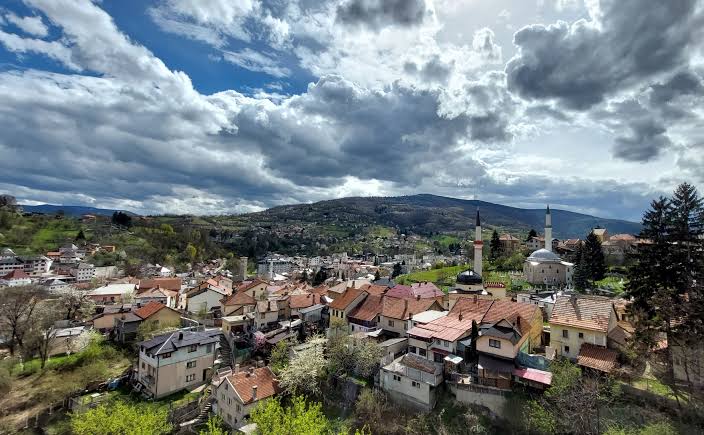
Our journey begins in Travnik, a town situated in the Lašva River valley, surrounded by green hills and overlooked by the impressive Vlašić Mountain.
Travnik has a particularly important place in Bosnian history. During the Ottoman period, it became the residence of the Bosnian viziers, the governors responsible for administering the province. For more than a century, it was one of the most important political and administrative centres in Ottoman Bosnia.
That history is still visible throughout the town. Mosques, clock towers, traditional houses and narrow streets preserve much of the atmosphere of an earlier period.
Travnik is not a large city, and that is part of its charm. Many of its most interesting landmarks are close to one another, allowing visitors to explore its historical centre on foot.
Travnik Fortress: Above the Town and Across the Centuries
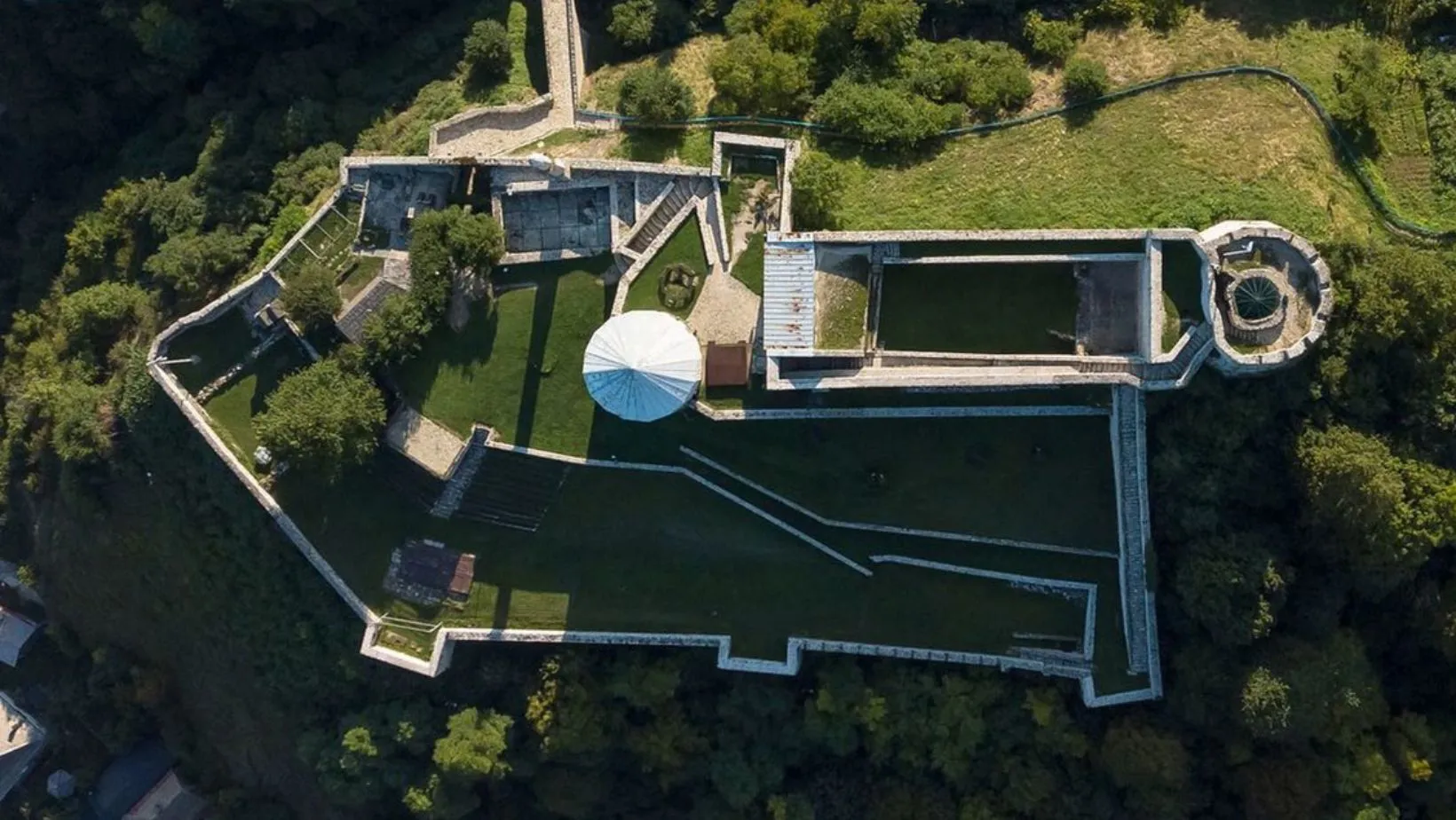
Dominating the town from its hillside position is Travnik Fortress, also known as Stari Grad.
Originally built during the medieval period, the fortress was later adapted and used under Ottoman and Austro-Hungarian rule. Its strategic location made it an important defensive structure, overlooking the valley and the settlement below.
Today, visitors can walk through its stone walls, explore its courtyards and enjoy panoramic views across Travnik. From above, the town's distinctive rooftops, minarets and surrounding mountains create a beautiful picture of Central Bosnia.
The fortress is particularly interesting because it represents several different chapters of the region's history. It is a reminder that Bosnia's past cannot be understood through a single historical period.
For visitors who enjoy photography, the views from the fortress are among the best in Travnik.
The Colourful Mosque: One of Bosnia's Most Distinctive Mosques
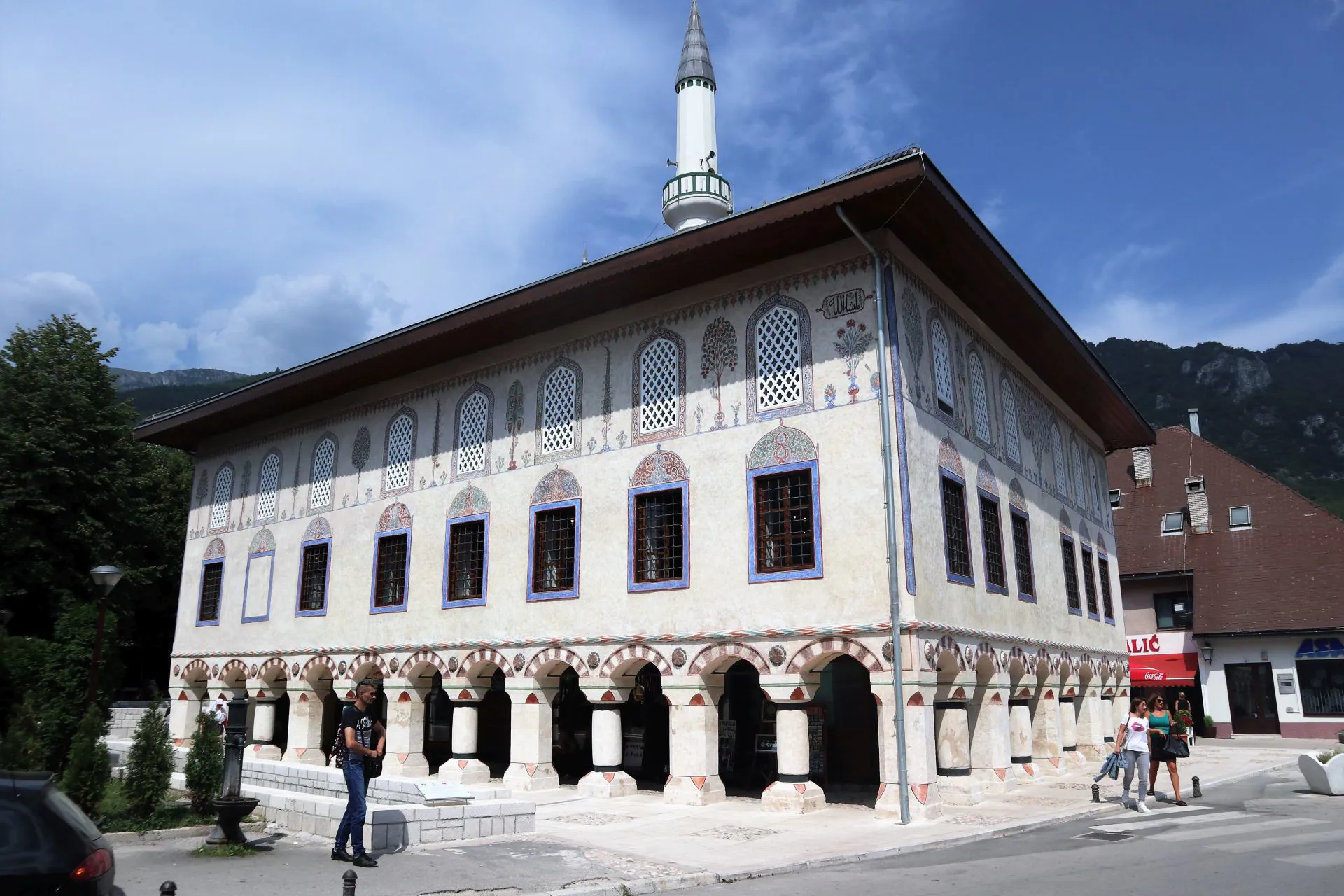
A short walk from the fortress brings you to one of Travnik's most recognisable landmarks: the Sulejmanija Mosque, commonly known as the Colourful Mosque (Šarena džamija).
Unlike many traditional Ottoman mosques, this building is immediately recognisable for its decorative exterior and richly painted interior. Floral patterns, geometric designs and colourful details give it a distinctive appearance.
The mosque has a long history and has undergone several reconstructions. Its present appearance is one of the most striking examples of decorative Islamic architecture in Bosnia and Herzegovina.
Located in the centre of the old town, it is also a reminder of Travnik's importance during the Ottoman period.
Visitors should remember that this is an active place of worship. Modest clothing and respect for prayer times are expected.
Plava Voda: A Natural Escape in the Centre of Travnik
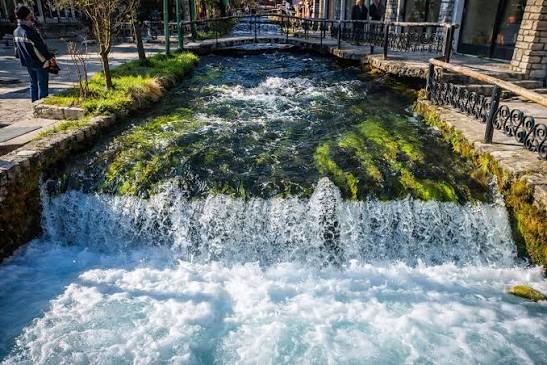
One of the most enjoyable places to visit in Travnik is Plava Voda, a beautiful natural spring located just below the old town.
The clear water flows through a peaceful setting surrounded by trees, traditional buildings and small restaurants. It is a favourite meeting place for locals and a welcome stop for travellers looking to take a break from sightseeing.
There is something particularly pleasant about sitting beside the water with a traditional Bosnian coffee while listening to the sound of the spring.
Plava Voda is also associated with Travnik's literary heritage. The area is connected to the atmosphere described in the works of Ivo Andrić, whose writing captured the history and character of the town.
If you are visiting Travnik, this is a place worth enjoying rather than simply photographing and passing by.
Travnik's Traditional Food: A Taste of Central Bosnia
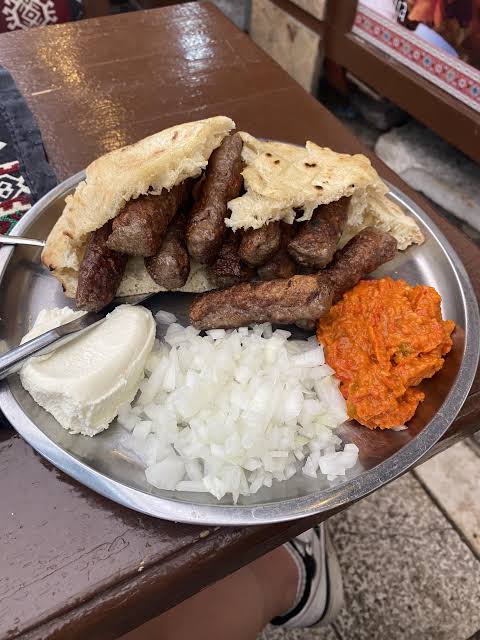
No visit to Travnik would be complete without trying some of its traditional food.
The town is particularly famous for its ćevapi, a popular Bosnian grilled meat dish served in freshly prepared somun bread, usually accompanied by chopped onions and kajmak.
Travnik's ćevapi have their own reputation in Bosnia, and comparing them with those served in Sarajevo is a familiar subject of friendly debate among locals.
Another speciality worth trying is Travnički sir, a traditional cheese associated with the region.
If your schedule allows, take some time to enjoy lunch in Travnik before continuing towards Jajce. A relaxed meal and a traditional Bosnian coffee are part of the experience, not just a break between destinations.
From Travnik to Jajce: A Journey Through Central Bosnia
Leaving Travnik, the road continues northwest towards Jajce.
The drive takes approximately one to one and a half hours, depending on traffic and road conditions. Along the way, you pass through the landscapes of Central Bosnia, with river valleys, green hills, small settlements and mountain scenery.
Jajce has a completely different character from Travnik. While Travnik is closely associated with the Ottoman administration, Jajce is particularly important for its connection to the medieval Bosnian Kingdom.
It was once a royal centre, and its historical significance is visible in the fortress, churches, underground catacombs and remains of medieval architecture.
But Jajce is not only a destination for history lovers. It is also home to one of the most recognisable natural attractions in Bosnia and Herzegovina.
Jajce: The Royal Town with a Waterfall in Its Centre
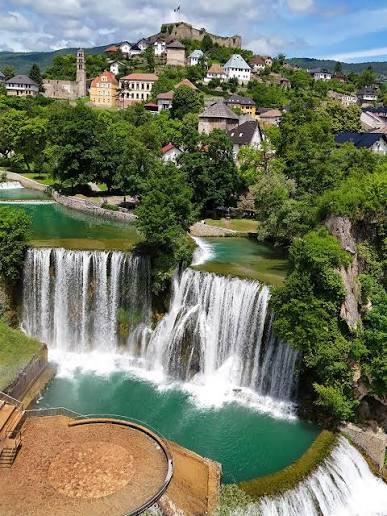
Jajce is one of those places that makes an immediate impression.
As you approach the historic centre, the medieval fortress rises above the rooftops, while the sound of flowing water hints at the natural attraction that has made the town famous.
The Pliva Waterfall is located directly below the old town, where the Pliva River flows into the Vrbas River. This unusual setting gives Jajce a character that is difficult to find elsewhere in the region.
The town's history is equally fascinating. During the medieval period, Jajce was an important centre of the Bosnian Kingdom and was closely connected to its royal rulers. It later became part of the Ottoman Empire and experienced further changes under different political administrations.
Walking through Jajce is like moving through several chapters of Bosnian history.
Pliva Waterfall: The Natural Landmark of Jajce
The first attraction most visitors want to see in Jajce is its famous waterfall.
Approximately 22 metres high, the Pliva Waterfall is formed where the Pliva River meets the Vrbas River. What makes it especially impressive is its location right in the town centre, surrounded by historic buildings and the green landscape of the river valley.
There are several viewpoints from which to admire the waterfall. The most popular photographs are taken from the designated viewing area, where you can appreciate the full height and scale of the cascading water.
The waterfall looks different throughout the year. During periods of higher water levels, it can be particularly powerful, while the warmer months offer a different atmosphere around the old town.
For many visitors, this is the highlight of the entire excursion.
It is worth taking a little time to enjoy the surroundings rather than simply stopping for a photograph. The combination of water, cliffs, greenery and historic architecture makes this one of the most memorable sights in Bosnia and Herzegovina.
Visitor note: Access to the designated lower waterfall viewpoint may require an entrance ticket. Check current arrangements before your visit.
Jajce Fortress: Exploring the Medieval Royal Centre
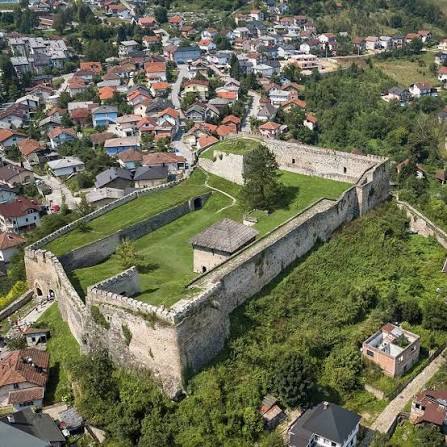
Above the old town stands Jajce Fortress, a reminder of the town's importance during the medieval Bosnian Kingdom.
The fortress occupies a commanding position overlooking the town and the surrounding river valleys. Its walls and towers were part of the defensive system that protected one of the most important political centres of medieval Bosnia.
Jajce is closely associated with the last Bosnian king, Stjepan Tomašević, who was crowned in 1461. Just a few years later, the Ottoman conquest brought an end to the independent medieval Bosnian Kingdom.
Walking through the fortress offers a glimpse into this important period of history. From its elevated position, visitors can enjoy beautiful views across Jajce, including the old town, surrounding hills and the rivers below.
It is also one of the best places to appreciate how naturally the town fits into the surrounding landscape.
The Catacombs of Jajce: An Underground Piece of History
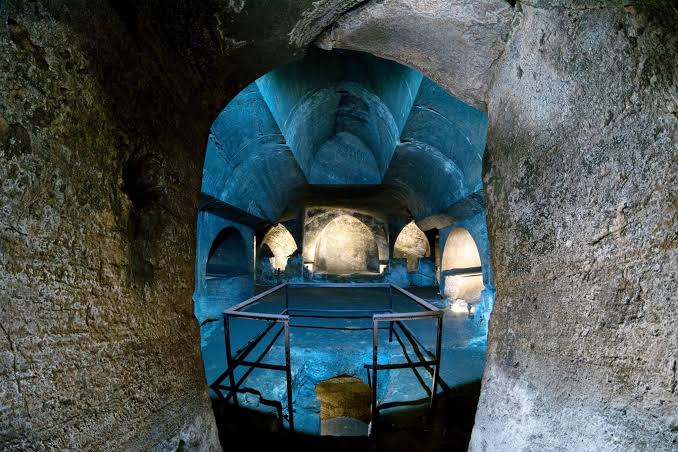
One of the lesser-known historical attractions in Jajce is its underground complex, commonly referred to as the Catacombs.
Carved into the rock beneath the old town, the catacombs are traditionally associated with the medieval nobleman Hrvoje Vukčić Hrvatinić and date from the early fifteenth century.
The underground complex was intended as a burial place and includes a chapel with carved religious symbols and architectural details.
It is a fascinating place to visit because it offers a different perspective on medieval Bosnia. The region's religious and political history was complex, and sites such as the catacombs help illustrate that complexity.
Although the complex is relatively small, it is one of the most unusual historical attractions in Jajce.
The Church of Saint Mary and the Bell Tower of Saint Luke
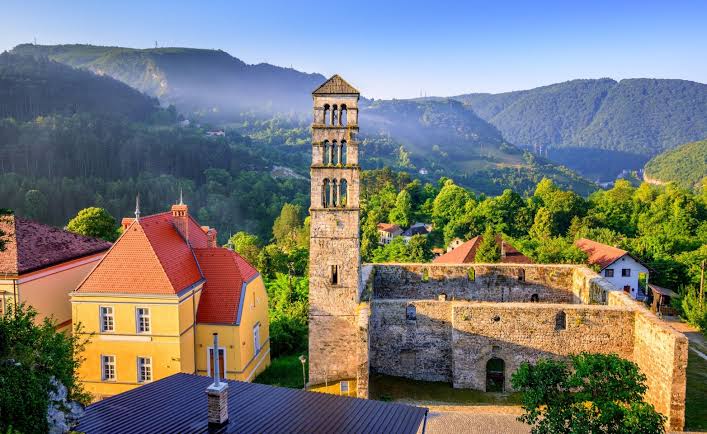
Jajce's medieval heritage is also visible in the remains of the Church of Saint Mary and the nearby Bell Tower of Saint Luke.
The church is traditionally associated with the coronation of the last Bosnian king, Stjepan Tomašević, in 1461.
Although much of the original building no longer survives, the site remains an important part of the town's cultural and religious heritage.
The nearby bell tower is a distinctive medieval structure and an unusual feature in the architectural landscape of Bosnia and Herzegovina.
Together, these remains help tell the story of Jajce during the period when it was one of the most important towns in the Bosnian Kingdom.
Pliva Lakes and Mlinčići: The Natural Beauty Beyond Jajce
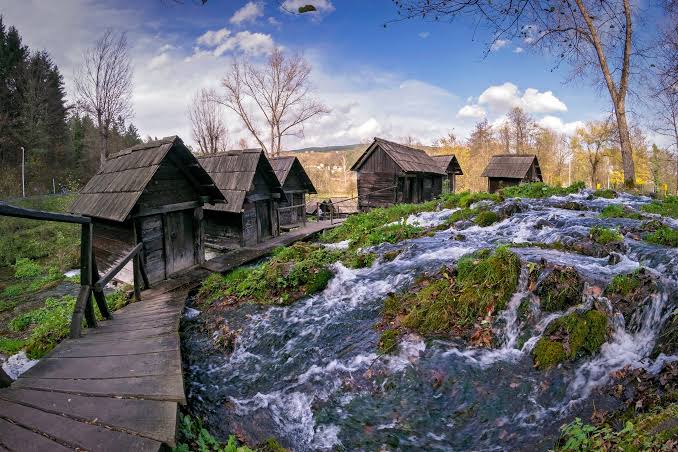
After exploring the historic centre of Jajce, it is worth continuing a little further to discover the Pliva Lakes.
Located just outside the town, the Great and Small Pliva Lakes are surrounded by green hills, forests and peaceful lakeside scenery. The area offers a completely different atmosphere from the historic centre and is a favourite destination for both locals and visitors.
One of its most recognisable attractions is Mlinčići, a group of traditional wooden watermills situated between the two lakes.
These small mills were historically used by local communities to grind grain, taking advantage of the natural flow of water between the lakes. Today, they remain an important part of the region's cultural heritage.
Their wooden structures, flowing water and green surroundings create one of the most photographed scenes in Central Bosnia.
The area is also a wonderful place to slow down and enjoy nature. Depending on the season, visitors can take walks along the lakes, enjoy a meal, go boating or simply spend some time away from the busy roads.
For travellers who have made the journey all the way from Sarajevo, the Pliva Lakes are well worth including in the itinerary.
How to Travel from Sarajevo to Travnik and Jajce
Travnik and Jajce are located northwest of Sarajevo and can be visited together in one full day.
Travnik is approximately 90–100 kilometres from Sarajevo, while Jajce is approximately 160–170 kilometres from the capital.
The journey between Travnik and Jajce takes roughly one to one and a half hours by car.
Travelling by Car
Driving is one of the easiest ways to explore both destinations. It allows you to decide how much time to spend in each town and gives you the flexibility to visit the Pliva Lakes and surrounding countryside.
The route is scenic, but the total journey is relatively long. An early departure from Sarajevo is recommended, especially if you want to explore the main attractions without rushing.
Travelling by Bus
There are bus connections between Sarajevo and Travnik, as well as between Sarajevo and Jajce.
However, visiting both towns in one day by public transport requires careful planning. You need to consider departure times, connections between the destinations and the return journey to Sarajevo.
For travellers with limited time, public transport may be more suitable for visiting one town at a time or staying overnight.
Always check current timetables with the bus operators before travelling.
Joining an Organised Day Tour
If you would rather enjoy the journey without worrying about driving, parking or bus connections, an organised day tour is another option.
Travelling with a local guide also gives you the opportunity to understand the history behind the places you visit. Many landmarks in Central Bosnia have stories that are not immediately obvious, and having someone explain their historical and cultural significance can make the experience much more rewarding.
A well-planned excursion also helps you make the most of your available time, especially when visiting two towns in a single day.
When Is the Best Time to Visit Travnik and Jajce?
Travnik and Jajce can be visited throughout the year, although the experience changes with the seasons.
Spring
Spring is a particularly pleasant time to explore Central Bosnia. The surrounding countryside becomes greener, temperatures are generally comfortable for sightseeing and the rivers and waterfalls can be impressive.
Summer
Summer offers long daylight hours and plenty of opportunities to enjoy the Pliva Lakes. It is also a popular period for visiting both towns, so some attractions and viewpoints may be busier.
Autumn
Autumn brings beautiful colours to the surrounding hills and forests. Temperatures are often comfortable for walking, and the towns can feel quieter than during the summer months.
Winter
Winter gives Travnik and the surrounding mountains a completely different atmosphere. Snow can create beautiful scenery, particularly around Vlašić Mountain. However, road and weather conditions should be checked before departure, as travel may take longer.
For most visitors, spring, summer and early autumn are particularly good choices for a full-day excursion.
Why Travnik and Jajce Should Be on Your Bosnia Itinerary
Bosnia and Herzegovina is a country with an incredibly layered history. Different civilisations, empires and political periods have left their mark on its towns, architecture and traditions.
Travnik and Jajce offer an opportunity to experience that history in a particularly interesting way.
In Travnik, you can discover the legacy of Ottoman Bosnia, walk through a historic fortress, admire the Colourful Mosque and enjoy traditional food beside the natural spring of Plava Voda.
In Jajce, you can explore the history of the medieval Bosnian Kingdom, visit the royal fortress, stand beside one of the country's most impressive waterfalls and discover the beautiful Pliva Lakes.
What makes this excursion special is the contrast between the two destinations. One tells the story of Ottoman administration and culture, while the other reveals the legacy of medieval Bosnia and its later history.
Together, they provide a memorable introduction to a region that many international visitors never get the opportunity to explore.
Explore Travnik and Jajce with Bosnia Day Tours
If you are staying in Sarajevo and want to discover more of Bosnia and Herzegovina, Travnik and Jajce are an excellent place to start.
At Bosnia Day Tours, we organise excursions that allow travellers to explore the country's history, culture and natural beauty with the help of knowledgeable local guides.
Our Travnik and Jajce excursion takes you beyond the capital, combining the Ottoman heritage of Travnik with the medieval history and natural attractions of Jajce.
From the historic streets and traditional atmosphere of Travnik to the spectacular Pliva Waterfall and peaceful lakes of Jajce, this is a journey that shows you another side of Bosnia.
Whether you are visiting as a couple, with family or as part of a group, we would be happy to help you discover Central Bosnia.
Ready to explore beyond Sarajevo?
Discover Travnik with Bosnia Day Tours.
Frequently Asked Questions
Is Travnik worth visiting from Sarajevo?
Absolutely. Travnik is one of the most historically interesting towns in Bosnia and Herzegovina. Its Ottoman heritage, medieval fortress, Colourful Mosque, Plava Voda spring and traditional food make it a worthwhile destination.
Is Jajce worth visiting?
Yes. Jajce is famous for its waterfall in the town centre, medieval fortress, royal history, catacombs and the beautiful Pliva Lakes. It is one of the most distinctive destinations in the country.
How far are Travnik and Jajce from Sarajevo?
Travnik is approximately 90–100 kilometres from Sarajevo, while Jajce is approximately 160–170 kilometres away. Travelling by car, the journey to Travnik usually takes around 1.5–2 hours, while Jajce takes approximately 2.5–3 hours.
Can I visit Travnik and Jajce in one day?
Yes. Both towns can be visited in one full day from Sarajevo. An early departure is recommended to allow enough time for sightseeing.
What is Travnik famous for?
Travnik is known for its Ottoman history, the Colourful Mosque, Travnik Fortress, Plava Voda, traditional ćevapi and its connection to Nobel Prize-winning writer Ivo Andrić.
What is Jajce famous for?
Jajce is best known for the Pliva Waterfall, its medieval fortress, the historic catacombs, the AVNOJ Museum and the traditional wooden watermills at the Pliva Lakes.
What should I eat in Travnik?
Travnik is particularly famous for its ćevapi and Travnički sir. Traditional Bosnian coffee and freshly prepared pita are also worth trying.
Do I need a car to visit Travnik and Jajce?
A car makes the journey easier, particularly if you want to visit both towns in one day. However, organised day tours are a convenient alternative for travellers who do not want to drive.
What is the best time of year to visit?
Spring, summer and early autumn are particularly pleasant for sightseeing. Both destinations can also be visited during winter, provided weather and road conditions allow.