
20 Best Things to Do in Sarajevo: A Local's Guide to Bosnia's Capital
Sarajevo is one of those cities that tends to stay with you long after you leave. Tucked between green mountains and shaped by centuries of Ottoman, Austro-Hungarian and Yugoslav history, Bosnia and Herzegovina's capital is a place where different worlds meet in a remarkably small area.
You can spend your morning wandering through a centuries-old Ottoman bazaar, enjoy a traditional Bosnian coffee in the afternoon, and finish your day watching the sunset from a fortress overlooking the entire city. Along the way, you'll encounter beautiful architecture, fascinating history, welcoming locals and some of the best food in the Balkans.
But Sarajevo is much more than its famous Old Town. Its mountains preserve the legacy of the 1984 Winter Olympics, its streets tell stories of resilience during the 1992–1995 siege, and the surrounding countryside offers some of the most beautiful landscapes in Southeast Europe.
Whether you're visiting for a weekend or planning a longer stay, here are 20 of the best things to do in Sarajevo, including a few recommendations that many visitors overlook.
1. Explore Baščaršija, Sarajevo's Old Bazaar
No visit to Sarajevo is complete without spending time in Baščaršija, the historic heart of the city.
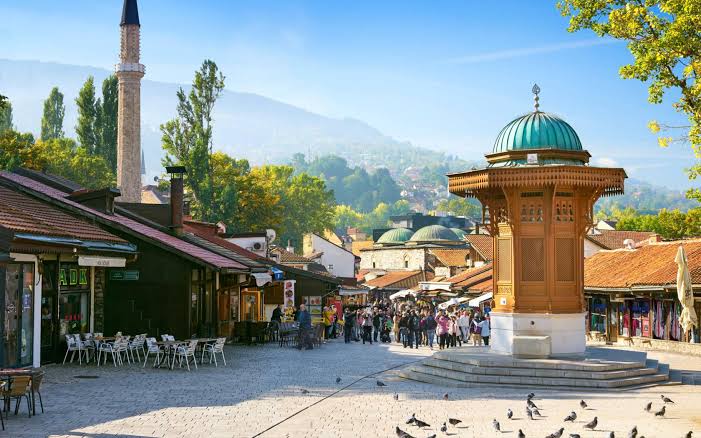
Established in the 15th century, during the early Ottoman development of Sarajevo, Baščaršija was once the commercial centre of the city. Today, its narrow cobblestone streets are filled with traditional craft shops, restaurants, cafés, mosques and small courtyards.
Take your time exploring the area rather than simply walking through it. You'll find traditional copper workshops, handmade souvenirs, local bakeries and restaurants serving authentic Bosnian dishes.
One of the most charming things about Baščaršija is that it still feels like a living part of the city rather than an open-air museum. Locals continue to meet friends, drink coffee and go about their daily routines here.
Local tip: Don't limit yourself to the main square. Wander down the smaller streets around Kazandžiluk and Bravadžiluk. Some of the most interesting details are hidden away from the busiest pedestrian areas.
2. See the Famous Sebilj Fountain
Located in the centre of Baščaršija, Sebilj is probably the most recognisable landmark in Sarajevo.
This beautiful wooden fountain was built in 1753 and has become one of the city's most photographed spots. Its distinctive Ottoman design makes it a natural meeting point for visitors and locals alike.
There is also a popular local legend associated with the fountain: whoever drinks water from Sarajevo's fountains will one day return to the city.
Whether you believe the story or not, it's worth stopping here, taking a photograph and enjoying the atmosphere of the Old Town.
You'll probably notice the pigeons gathering around the square, which have become almost as famous as the fountain itself.
3. Walk Along Kazandžiluk, the Street of Coppersmiths
Just a short walk from Sebilj is Kazandžiluk, one of the oldest and most characterful streets in Sarajevo.
For generations, this street has been associated with traditional copper craftsmanship. Local artisans produce coffee sets, decorative plates, trays and other handmade objects using techniques passed down through families.
If you want to take home something genuinely connected to Bosnian culture, this is a good place to look.
You can often watch craftsmen working inside their small shops, shaping and decorating copper by hand.
It is a reminder that Sarajevo's heritage isn't only found in its historic buildings. It is also preserved through the people who continue practising traditional trades.
4. Visit Gazi Husrev-beg Mosque
One of the most important historical and religious landmarks in Bosnia and Herzegovina is Gazi Husrev-beg Mosque.
Completed in 1531, the mosque is considered one of the finest examples of Ottoman Islamic architecture in the Balkans.
Its impressive courtyard, stone minaret, domes and beautifully decorated interior make it worth visiting even if you have little knowledge of Islamic architecture.
The mosque was commissioned by Gazi Husrev-beg, an Ottoman governor whose endowments played an enormous role in the development of Sarajevo.
His legacy can still be seen throughout the Old Town, including the mosque, madrasa, library and other historic buildings.
Non-Muslim visitors are generally welcome outside prayer times, provided they respect the religious nature of the site. Dress modestly, remove your shoes when entering and follow the instructions of staff.
5. Discover Sarajevo City Hall (Vijećnica)
Sarajevo City Hall, locally known as Vijećnica, is one of the most impressive buildings in the country.
Completed in 1896 during Austro-Hungarian rule, the building is famous for its distinctive pseudo-Moorish architecture, combining European architectural influences with decorative elements inspired by Islamic art.
Originally constructed as the city's administrative headquarters, it later became home to the National and University Library.
During the siege of Sarajevo in August 1992, the building was set on fire, destroying much of its library collection, including hundreds of thousands of books and valuable historical documents.
Its restoration was completed in 2014, bringing the building back to life.
Today, visitors can admire its magnificent interior, colourful decorations and impressive central hall.
Even if you don't normally visit historic buildings, Vijećnica is worth seeing. It represents both Sarajevo's architectural beauty and its determination to preserve its cultural heritage.
6. Cross the Latin Bridge and Learn About the Start of World War I
The Latin Bridge is one of Sarajevo's most historically significant landmarks.
Situated over the Miljacka River, the bridge stands close to the location where Archduke Franz Ferdinand of Austria-Hungary and his wife Sophie were assassinated on 28 June 1914.
The assassination, carried out by Gavrilo Princip, became the immediate trigger for a chain of events that led to the outbreak of the First World War.
Today, you can stand at the very location where this historic event took place.
There is a small museum nearby, the Museum of Sarajevo 1878–1918, which provides more information about Sarajevo during Austro-Hungarian administration and the events surrounding the assassination.
Local tip: Take a moment to look at the different architectural styles along the river. Sarajevo's history is particularly visible in this part of the city, where Ottoman and Austro-Hungarian influences meet.
7. Walk Through Ferhadija and Visit the Sacred Heart Cathedral
Ferhadija is one of Sarajevo's main pedestrian streets, connecting the historic Ottoman quarter with the more European-looking city centre.
As you walk along it, you'll notice how quickly the city's architecture changes. Traditional Ottoman buildings gradually give way to Austro-Hungarian facades, shops, cafés and grand public buildings.
One of the most impressive landmarks along this route is the Sacred Heart Cathedral, also known as Sarajevo Cathedral.
Completed in 1889, it is the largest Catholic cathedral in Bosnia and Herzegovina and an important symbol of the city's religious diversity.
Sarajevo is sometimes referred to as the European Jerusalem because mosques, Catholic and Orthodox churches, and synagogues can be found within relatively short walking distances of one another.
This is one of the best places to appreciate that unique character of the city.
8. Visit the Old Orthodox Church and Sarajevo's Jewish Heritage Sites
Sarajevo's religious diversity is not just something mentioned in travel brochures. It is something you can experience by walking through the historic centre.
The Old Orthodox Church, dedicated to the Holy Archangels Michael and Gabriel, is one of the city's most important religious buildings. Its origins are generally traced to the Ottoman period, and its interior contains an impressive collection of icons and religious artefacts.
You can also explore Sarajevo's Jewish heritage through the historic Ashkenazi Synagogue, built in 1902, and the Jewish Museum located in the former Old Jewish Temple.
The Jewish community has been part of Sarajevo's history for centuries, particularly following the arrival of Sephardic Jews expelled from Spain in the late 15th century.
Visiting these sites provides a deeper understanding of the communities that helped shape Sarajevo into the multicultural city it is today.
9. Experience the War Childhood Museum
The War Childhood Museum is one of the most moving museums in Sarajevo.
Rather than focusing primarily on military operations or political history, the museum tells the story of the 1992–1995 war through the personal experiences of people who were children during the conflict.
Its exhibitions include everyday objects, photographs, letters and personal belongings accompanied by the stories of those who owned them.
A simple toy, a diary or a pair of shoes can reveal more about the experience of growing up during wartime than pages of historical explanations.
It is a relatively small museum, but the emotional impact is considerable.
Entrance fees:
- Adults: 15 KM
- University students: 12 KM
- Youth aged 6–17: 7 KM
- Children aged 5 and under: Free
- Family pass: 35 KM
The museum also offers free admission on the last Thursday of each month, from 17:00 to 19:00.
If you want to understand Sarajevo beyond its beautiful streets and architecture, this is an experience I would strongly recommend.
Give yourself enough time to read the stories properly. It is not a museum to rush through.
For the latest information, visit the official War Childhood Museum website.
10. Visit the Tunnel of Hope
For anyone interested in understanding the Siege of Sarajevo, a visit to the Tunnel of Hope is essential.
During the siege, Sarajevo was surrounded by Bosnian Serb forces, and the city's residents faced severe shortages of food, medicine, fuel and other necessities.
In 1993, a tunnel was constructed beneath the airport runway, connecting the besieged city with the territory outside the blockade.
The tunnel became a vital lifeline, allowing supplies, equipment and people to move in and out of Sarajevo.
Today, the Tunnel of Hope Museum preserves a section of the original tunnel and provides exhibitions explaining its construction and importance during the war.
Standing inside the preserved section gives visitors a small sense of the difficult conditions people experienced.
Entrance fees:
- Adults: 20 KM
- Students and pupils: 8 KM
- Children under 6: Free
- Audio guide: Additional 3 KM
Important: Bring cash in convertible marks (BAM). Card payments and foreign currencies are not accepted according to the museum's visitor information.
The museum is located outside the central tourist area, near Sarajevo International Airport, so you'll need to arrange transport to reach it.
For those interested in the city's recent history, this is one of the most worthwhile places to visit.
For updated visitor information, check the official Tunnel of Hope website.
11. Watch the Sunset from the Yellow Fortress (Žuta Tabija)
If you want one of the best panoramic views of Sarajevo, head towards Žuta Tabija, or the Yellow Fortress.
Located on the hills above the Old Town, the fortress offers beautiful views across the rooftops, minarets, church towers and surrounding mountains.
It is particularly popular around sunset, when the city slowly changes colour and the lights begin appearing across the valley.
During Ramadan, the area also attracts locals who gather to enjoy the traditional cannon firing that marks the end of the daily fast.
The walk uphill can be a little tiring, particularly during the summer, but the view makes it worthwhile.
Bring your camera, take something to drink and enjoy the atmosphere.
Local tip: Arrive a little before sunset rather than exactly at sunset. You'll have more time to find a comfortable spot and appreciate the changing light.
12. Take the Cable Car to Mount Trebević
One of the easiest ways to escape the busy city streets is to take the Sarajevo cable car up Mount Trebević.
The lower station is located near the Bistrik neighbourhood, just a short distance from the Old Town.
Within minutes, you'll find yourself above the city, surrounded by forest and enjoying panoramic views of Sarajevo.
Trebević has long been a favourite recreational area for Sarajevo residents. Before the war, it was a popular destination for hiking, picnics and winter activities.
Today, the mountain is once again an excellent place to spend a few hours outdoors.
You can enjoy walking trails, fresh mountain air, viewpoints and places to relax away from the noise of the city.
The cable car is an experience in itself, particularly on a clear day when you can see much of Sarajevo stretching beneath you.
Check the cable car's operating schedule before visiting, as service can vary depending on weather and maintenance.
13. Walk Along the Abandoned Olympic Bobsled Track
This is one of the most unusual attractions in Sarajevo and, in my opinion, one of the most interesting.
When Sarajevo hosted the 1984 Winter Olympic Games, Mount Trebević was home to the Olympic bobsleigh and luge track.
The track was considered a major sporting facility at the time and attracted international attention during the Games.
However, the Bosnian War left much of the Olympic infrastructure damaged and abandoned.
Today, sections of the old bobsled track remain on Trebević, surrounded by forest and covered in colourful graffiti.
Walking along it feels like stepping into a different period of history.
You can still recognise the curves and structure of the original track, although nature has gradually reclaimed parts of the surrounding area.
It is an especially interesting attraction for anyone interested in sports history, photography or unusual urban exploration.
The track can be reached from the upper cable car station with a walk. Wear comfortable shoes, watch your footing and avoid climbing on damaged structures.
It is worth remembering that this is a historic sporting facility, not a maintained amusement attraction.
14. Discover Vrelo Bosne, the Source of the River Bosna
If you need a break from sightseeing, Vrelo Bosne is one of the most peaceful places around Sarajevo.
Located in Ilidža, at the foot of Mount Igman, this beautiful natural park is home to the springs of the River Bosna.
The area is famous for its clear water, small waterfalls, wooden bridges, green landscapes and beautiful tree-lined pathways.
One of the highlights is the approximately three-kilometre-long avenue of plane trees and chestnut trees connecting central Ilidža with the park entrance.
You can walk along the avenue, rent a bicycle or simply enjoy the surroundings.
Once inside Vrelo Bosne, there are plenty of peaceful spots to sit, take photographs and enjoy nature.
It is particularly popular with local families during weekends and warmer months.
If you have a little more time in Sarajevo, I would definitely recommend including this place in your itinerary.
15. Discover Ilidža and Its Austro-Hungarian Architecture
Many visitors travel directly from Sarajevo's Old Town to the mountains without realising that Ilidža has its own interesting history and atmosphere.
Located in the western part of the city, Ilidža developed as an important spa and recreational destination, particularly during Austro-Hungarian administration.
The area is known for its green parks, historic hotels, thermal springs and beautiful architecture.
One of its most recognisable buildings is Hotel Austria & Bosnia, which reflects the area's historic reputation as a place for relaxation and wellness.
You can also visit the nearby Roman Bridge, an old stone bridge over the Bosna River, and explore the surrounding green areas.
Combine Ilidža with Vrelo Bosne for a relaxing half-day away from the busy city centre.
16. Get a Panoramic View from Avaz Twist Tower
For a completely different perspective of Sarajevo, visit the Avaz Twist Tower.
Standing in the Marijin Dvor neighbourhood, this distinctive skyscraper is one of the tallest buildings in Bosnia and Herzegovina.
Its twisting glass exterior makes it easy to recognise, while the observation deck provides panoramic views over the city.
From above, you can appreciate how Sarajevo developed along the Miljacka River, surrounded by mountains on almost every side.
It is particularly interesting to visit if you want to understand the geography of the city and see how its different neighbourhoods connect.
The observation deck is also a nice alternative to the outdoor viewpoints if the weather is not particularly pleasant.
17. Visit the National Museum of Bosnia and Herzegovina
If you're interested in history, archaeology, nature or culture, the National Museum of Bosnia and Herzegovina deserves a place on your itinerary.
Founded in 1888, the museum is one of the country's most important cultural institutions.
Its impressive complex consists of several pavilions and a botanical garden.
Inside, you'll find exhibitions covering archaeology, ethnology and natural history, offering an overview of Bosnia and Herzegovina's development across thousands of years.
One of its most famous treasures is the Sarajevo Haggadah, a beautifully illustrated medieval Jewish manuscript with enormous historical and cultural importance. Its exhibition arrangements can vary, so check availability before planning your visit specifically around it.
The museum is a good option for travellers who want to go beyond the usual Old Town sightseeing experience.
18. Try Traditional Bosnian Food and Drink Bosnian Coffee
You cannot properly experience Sarajevo without trying its traditional food.
Bosnian cuisine has been influenced by Ottoman, Mediterranean and Central European traditions, resulting in a delicious mixture of flavours.
Start with ćevapi, perhaps the most famous Bosnian dish. These small grilled meat sausages are traditionally served in somun bread, accompanied by chopped onions and sometimes kajmak.
Other dishes worth trying include:
- Burek: Traditionally a meat-filled pastry made with thin layers of dough.
- Sogan-dolma: Onions stuffed with seasoned minced meat.
- Begova čorba: A traditional chicken and okra soup.
- Klepe: Small Bosnian dumplings, usually served with a yoghurt-based sauce.
- Tufahija: An apple dessert stuffed with walnuts and served with whipped cream.
And then there is Bosnian coffee.
Drinking Bosnian coffee is not simply about getting your caffeine fix. It is a social tradition and an important part of everyday life.
It is traditionally prepared in a small copper pot called a džezva and served with a small cup, often accompanied by a sugar cube or a piece of Turkish delight.
Don't rush it. Sit down, enjoy the conversation and take your time.
That's how locals do it.
19. Visit the Eternal Flame and Walk Along Maršala Tita Street
The Eternal Flame, known locally as Vječna vatra, is one of Sarajevo's most recognisable monuments.
Located at the beginning of Ferhadija and Maršala Tita streets, it was unveiled in 1946 in memory of the military and civilian victims of the Second World War.
The flame has remained an important symbol of remembrance in the city.
From here, you can continue walking along Maršala Tita, one of Sarajevo's main streets, which features a mixture of historic buildings, shops, cafés and restaurants.
This is a great way to experience another side of Sarajevo, away from the traditional atmosphere of Baščaršija.
You will also pass several landmarks and interesting architectural details along the way.
20. Take a Day Trip from Sarajevo and Discover More of Bosnia and Herzegovina
One of the biggest advantages of visiting Sarajevo is its location.
The city is an excellent base for exploring the rest of Bosnia and Herzegovina, and some of the country's most beautiful destinations can be reached within a day.
If you have three or more days in Sarajevo, I would strongly recommend setting aside at least one day to explore beyond the capital.
Here are some of the trips worth considering:
Mostar, Blagaj, Kravice Waterfalls and Počitelj
Perhaps the most popular excursion from Sarajevo, this route takes you towards Herzegovina, a region known for its warmer climate, beautiful landscapes and distinctive architecture.
In Mostar, you can admire the famous Stari Most (Old Bridge), explore the historic Ottoman streets and enjoy the atmosphere of the Old Town.
Continue to Blagaj, home to the beautiful Dervish Tekke beside the source of the Buna River. Depending on the season and your itinerary, you can also visit the spectacular Kravice Waterfalls and the historic village of Počitelj.
It's a long day, but an incredibly rewarding experience.
If you'd like to explore this region with a local guide, take a look at our Mostar and Herzegovina day tour.
Lukomir Village and the Bjelašnica Mountains
For something completely different, consider a trip to Lukomir, one of Bosnia and Herzegovina's most remarkable traditional mountain villages.
Situated at approximately 1,495 metres above sea level, Lukomir is known for its traditional stone houses, spectacular mountain scenery and views towards the Rakitnica Canyon.
The journey takes you away from the busy city and into a landscape that feels worlds apart from Sarajevo.
Depending on the season and weather conditions, you can enjoy hiking, explore the village and experience a more traditional way of life.
For travellers who enjoy nature, photography and authentic local experiences, this is a particularly special excursion.
Discover our Lukomir hiking experience.
Travnik and Jajce
History lovers should consider visiting Travnik and Jajce.
Travnik was once the seat of Ottoman governors in Bosnia and is known for its historic fortress, colourful mosques and traditional architecture.
Jajce is famous for its spectacular waterfall, located right in the centre of town, as well as its medieval fortress and historic heritage.
Together, these two destinations offer an excellent introduction to central Bosnia.
If you'd like to discover both destinations with a knowledgeable local guide, explore our Travnik and Jajce day tour.
Srebrenica
For those interested in understanding Bosnia's recent history, a visit to Srebrenica and the Srebrenica-Potočari Memorial Centre is a deeply meaningful experience.
The memorial commemorates the victims of the July 1995 genocide and provides an important educational opportunity for visitors seeking to understand one of the darkest chapters of modern European history.
This is not a conventional sightseeing excursion. It is a journey of remembrance, education and understanding.
You can learn more about our Srebrenica Genocide Memorial tour from Sarajevo.
A local recommendation: Don't choose a day trip simply because it is popular. Think about what interests you most. If you love architecture and history, choose Mostar or Travnik. If you prefer nature and hiking, Lukomir is an excellent option. If you want to understand Bosnia's recent history, consider Srebrenica.
There is a lot more to this country than Sarajevo, and exploring beyond the capital can easily become one of the highlights of your visit.
How Many Days Should You Spend in Sarajevo?
If you're visiting Sarajevo for the first time, I would recommend spending at least two full days in the city.
Two days will give you enough time to explore Baščaršija, visit the main historical landmarks, enjoy traditional food and experience some of the city's most beautiful viewpoints.
With three or four days, you can slow down and include places such as the Tunnel of Hope, Trebević, Vrelo Bosne and one of the city's museums.
If you have five days or more, consider using Sarajevo as your base for exploring other parts of Bosnia and Herzegovina.
The important thing is not to rush through everything. Sarajevo is a city best experienced at a slower pace.
Final Thoughts: Why Sarajevo Deserves a Place on Your Travel List
Sarajevo is not a city that can be fully understood through photographs or a list of attractions.
Its beauty comes from the combination of its history, architecture, culture, food and people. It is a city that has experienced extraordinary challenges but continues to welcome visitors with warmth and hospitality.
You can spend the morning exploring Ottoman streets, learn about the events of the twentieth century in the afternoon, and finish the day surrounded by mountains overlooking the city.
And perhaps that's what makes Sarajevo so special: there is always something else to discover.
Whether you're here for a weekend or planning a longer journey through Bosnia and Herzegovina, take your time, speak to locals, try the traditional food and venture beyond the usual tourist routes.
You'll probably leave with a much deeper appreciation of this remarkable city than you expected.
Planning your visit to Sarajevo?
At Bosnia Day Tours, we believe the best way to experience Bosnia and Herzegovina is through its history, landscapes and people. Our locally guided excursions take you beyond the capital to discover places, stories and experiences that make this country so special.
If you'd like to explore more of Bosnia during your stay, take a look at our available day trips and find the experience that suits your journey.